THAI RESERVE
THAI RESERVE
Pure Thai Sativa (Southeast Asian Landrace)
Flowering: 90–95 Days (≈14 Weeks)
Stretch: High (2.5–3×)
Plant Size: Tall, narrow-leaved equatorial sativa
Yield: High (outdoor / long-season production)
Difficulty: Advanced – long flowering, sensitive to excess feeding
Aroma: Earth • Green Tea • Sweet Spice • Tobacco Wood
THC / Cannabinoids: 18–22% THC | Rich in minor cannabinoids, notably THCV
Summary / Suitability
Thai Reserve represents the preserved expression of Thailand’s classic jungle sativa lineage, cultivated for generations across the humid, high-rainfall regions of Northern and coastal Thailand. Bred through natural selection rather than hybridization, it is a living link to the original equatorial cannabis cultivated along ancient Asian trade routes. Known for its long flowering cycle, complex aroma, and euphoric, spiritually bright high, it remains one of the world’s most revered pure sativas.
Genetic & Regional Background
Originating from early Central Asian cannabis that spread east along the Silk Road and through maritime trade, Thai landraces evolved under tropical humidity and consistent 12-hour photoperiods. The Mongol expansion during the 13th century accelerated this genetic migration, leading to the establishment of Thai, Laotian, and Cambodian sativas. Over centuries, isolation and local adaptation shaped distinct chemotypes characterized by long flowering, high THCV content, and deeply aromatic resins. Thai Reserve is a preserved heirloom from this original Southeast Asian gene pool.
Plant Characteristics
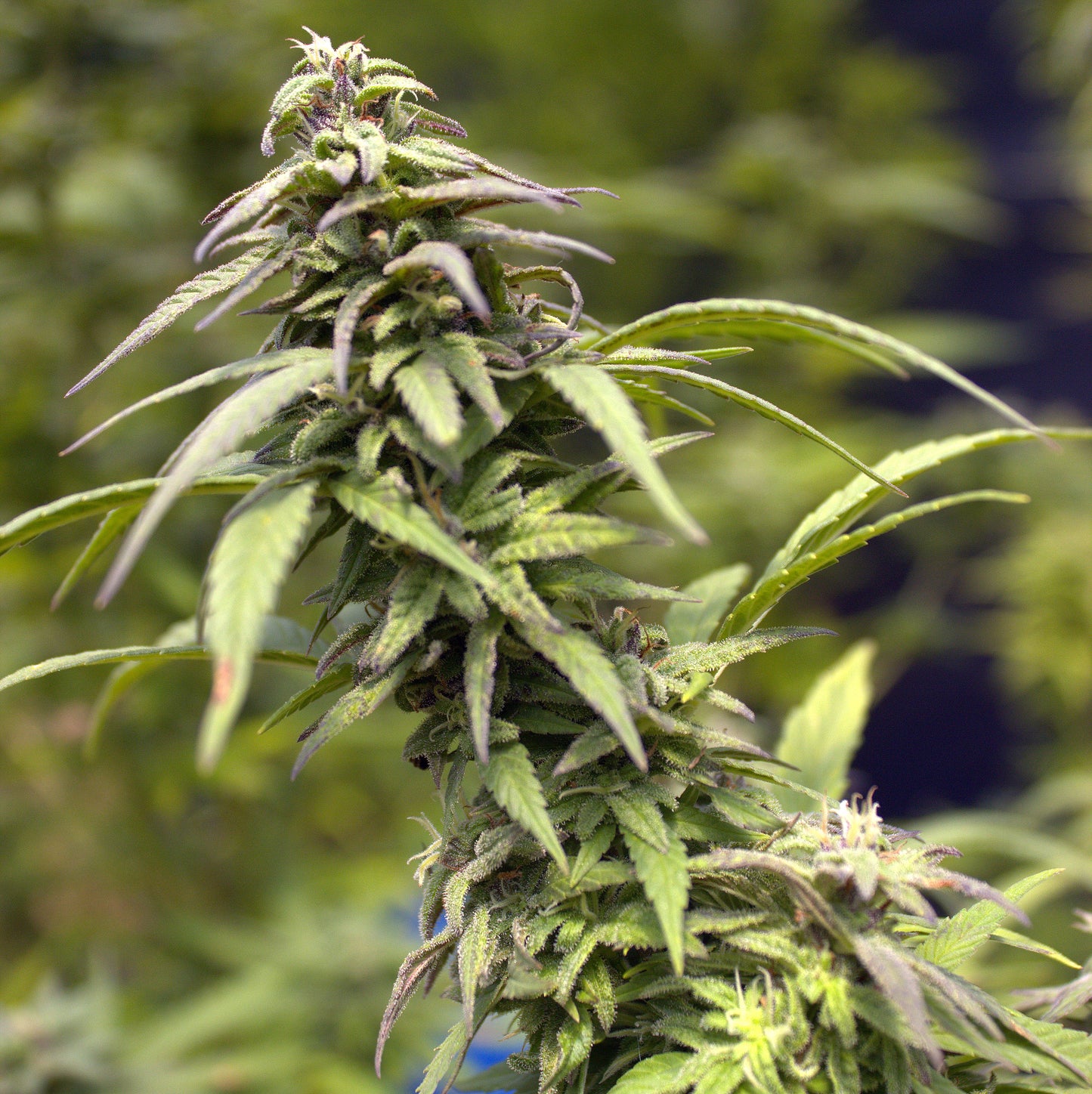
Thai Reserve displays the classic equatorial sativa form—extremely tall, narrow-leaved, and flexible. Plants often exceed three meters in height when untrained. The internodal spacing is moderately tight for a tropical type, allowing continuous flower formation along stems and branches. The open structure allows light and air to penetrate deep into the canopy, improving resistance to mold in humid regions. Foliage is fine-textured, with long, thin blades that taper elegantly, showing bright green to pale lime coloration. Near maturity, subtle red or amber tones may appear in the pistils and leaf edges.
Flower & Resin Characteristics
Flowers are long, wispy, and delicately resinous—an adaptation to the wet, equatorial environment. Buds form elongated spears with abundant pistils and a high calyx-to-leaf ratio. Resin coverage is fine and uniform, producing a shimmering surface under full light. The aroma develops gradually through flowering, starting with earthy and herbal notes and finishing with layered tones of green tea, sandalwood, and dried spice. When cured, the bouquet becomes smooth and refined—earthy, tea-like, and slightly sweet, reminiscent of aged tobacco and incense.
Growing Tips (Indoor & Outdoor)
Indoor: Best suited to large spaces or controlled greenhouses. Requires training, patience, and light feeding. Thai sativas are sensitive to nutrient excess, especially nitrogen. Maintain warm temperatures (26–30 °C) with steady airflow. Expect a full 14-week bloom for optimal cannabinoid and terpene development.
Outdoor / Tropical: Excels in long-season equatorial climates with stable daylight cycles. Plants thrive under full tropical sun and deep, well-draining soil with organic inputs. Their natural resistance to humidity and pests makes them reliable performers in open-field or greenhouse settings.
Effects & Potency
The high is quintessentially Thai—clear, uplifting, and long-lasting. It begins with a sharp cerebral lift that deepens into a calm, meditative focus. The mental stimulation is intense yet controlled, often described as “psychedelic clarity.” Suitable for daytime or creative use, the effect endures for hours with little to no physical heaviness.
Cultural Significance
Thai heirloom genetics shaped the global cannabis landscape, contributing to foundational hybrids such as Haze and Chocolate Thai. Cultivated historically in the northern Thai jungles and coastal provinces, these plants were valued for their spiritual, meditative qualities and aromatic refinement. Thai Reserve remains one of the last true equatorial sativas—preserved and revered as a living expression of Southeast Asia’s ancient cannabis heritage.